
Report
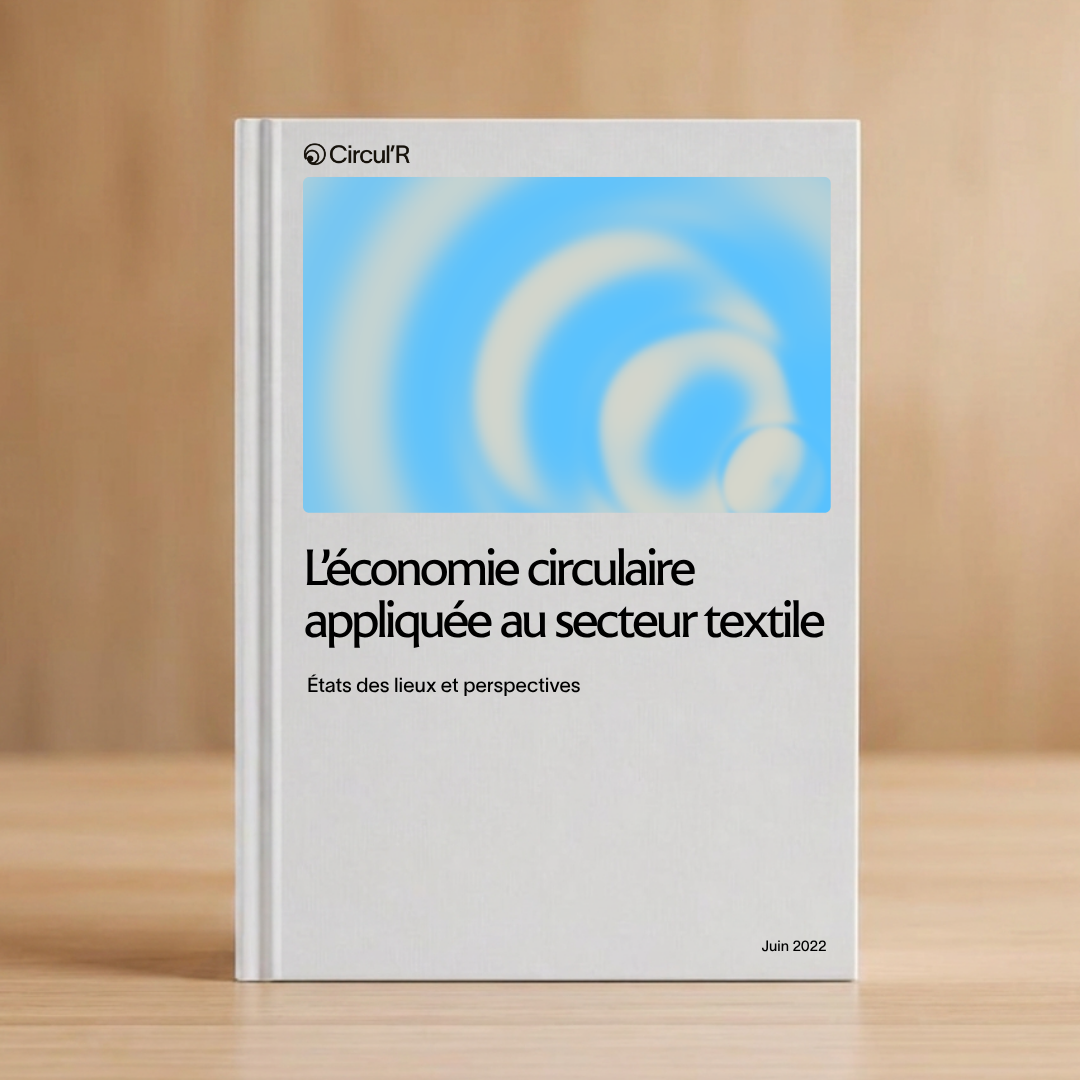
How can we accelerate the textile sector's transition to a circular economy?
Circul'R reviews the environmental impacts of the textile sector and sets out concrete solutions to accelerate its circular transition.
Background
On 24 April 2013, the collapse of the Rana Plaza building in Bangladesh brought the appalling production conditions of the textile industry into the spotlight. Reported worldwide, the disaster was a first step in raising consumer awareness of the sector's social impacts.
Environmental impacts of the textile sector
Beyond the human factor, textile-related activities have dramatic consequences for the environment. Textiles account for 2% of global greenhouse gas emissions and rank among the most polluting industries on the planet, ahead of shipping and aviation.
Characterised by a complex value chain, the life cycle of textile materials, from manufacture to end of life, is currently built on a linear model: continuous resource extraction, an ever shorter use phase and an almost complete absence of material recovery at end of life. This model reinforces the sector's negative externalities, for people and for the planet alike.
Challenges and solutions for the textile sector's circular transition
In this report, Circul'R set out to document the environmental impacts of the textile industry in order to highlight the limits of this linear approach. Continuing its commitment to accelerating the transition to a circular economy, and as the aggregator of an ecosystem of more than 1,000 solution providers, Circul'R wanted to showcase concrete, proven projects to demonstrate that a far-reaching transformation of the textile industry is possible.
FAQ
What you need to know about us.
Qu'est-ce que Circul'R ?
Circul'R est un cabinet de conseil spécialisé en économie circulaire. Depuis 2016, il accompagne plus de 150 grandes entreprises et acteurs publics à travers des missions de conseil, des coalitions sectorielles, des programmes de formation et le Club Circul'R.
What sets Circul'R apart from a generalist consulting firm?
Circul'R has focused exclusively on the circular economy since its inception. This specialization allows us to develop an expertise in resource dynamics and sector-specific transformations that a generalist firm cannot match.
What types of organizations do you work with?
Contrairement à un cabinet RSE généraliste, Circul'R est spécialisé exclusivement en économie circulaire depuis 2016. Cette expertise transverse - filières, réglementations (AGEC, REP, ESPR), business models - lui permet de transformer la circularité en avantage compétitif mesurable : réduction d'impact, sécurisation des ressources, conformité et nouveaux relais de croissance.
What is the process for a consulting project with Circul'R?
Circul'R conseille les grandes entreprises privées - dont de nombreux groupes du CAC 40 et du SBF 120 - sur leurs décisions stratégiques, tous secteurs confondus. Le cabinet accompagne également les acteurs qui déploient les politiques publiques d'économie circulaire : éco-organismes, agences, bailleurs de fonds et collectivités.
Do you operate only in France or internationally as well?
Circul'R propose quatre offres complémentaires : des missions de conseil sur mesure pour structurer votre stratégie circulaire, des coalitions sectorielles pour résoudre des problématiques communes entre entreprises, des formations pour monter en compétence sur l'économie circulaire, et le Club Circul'R, le réseau des entreprises engagées dans la transition circulaire.
How does the circular economy fit into an existing corporate strategy?
Circul'R accompagne ses clients sur l'ensemble du cadre réglementaire français et européen de l'économie circulaire : loi AGEC, filières REP, CSRD, ainsi que les textes européens récents (PPWR, ESPR, CRMA). Le cabinet traduit ces obligations en feuilles de route opérationnelles, pour transformer une contrainte de conformité en avantage stratégique.
What is a sector-based coalition and how can I participate?
Nous définissons en amont des indicateurs de circularité adaptés (matières économisées, taux de réemploi, réduction d'empreinte, valeur générée) et suivons leur évolution tout au long de la mission, pour des résultats business et environnementaux concrets.
How do you measure the results of your engagements?
Basé à Paris, Circul'R intervient principalement en France et en Europe. À l'international, il accompagne des projets de coopération : partage de l'expertise française sur la REP, appui aux bailleurs de fonds sur leurs programmes de transition circulaire dans les pays émergents, via un réseau de partenaires opérationnels et d'experts sectoriels.
What is the average duration of a project?
Contactez l'équipe via le site : Circul'R analyse vos enjeux puis propose le dispositif adapté (mission de conseil, rejoindre une coalition, suivre une formation ou adhérer au Club) pour accélérer votre transition vers l'économie circulaire.