
Article
Product-service systems: what benefits for organisations and regions?
In a world where industry and the production of goods is the sector that consumes the most resources and emits the most greenhouse gases, can we imagine economic growth decoupled from the degradation of our environment?
Environmental pressures are calling into question our consumption habits and the economic models built around them. In a world where industry and the production of goods is the sector that consumes the most resources and emits the most greenhouse gases, can we imagine economic growth decoupled from the degradation of our environment?
An environmental context calling for value creation to be decoupled from resource consumption
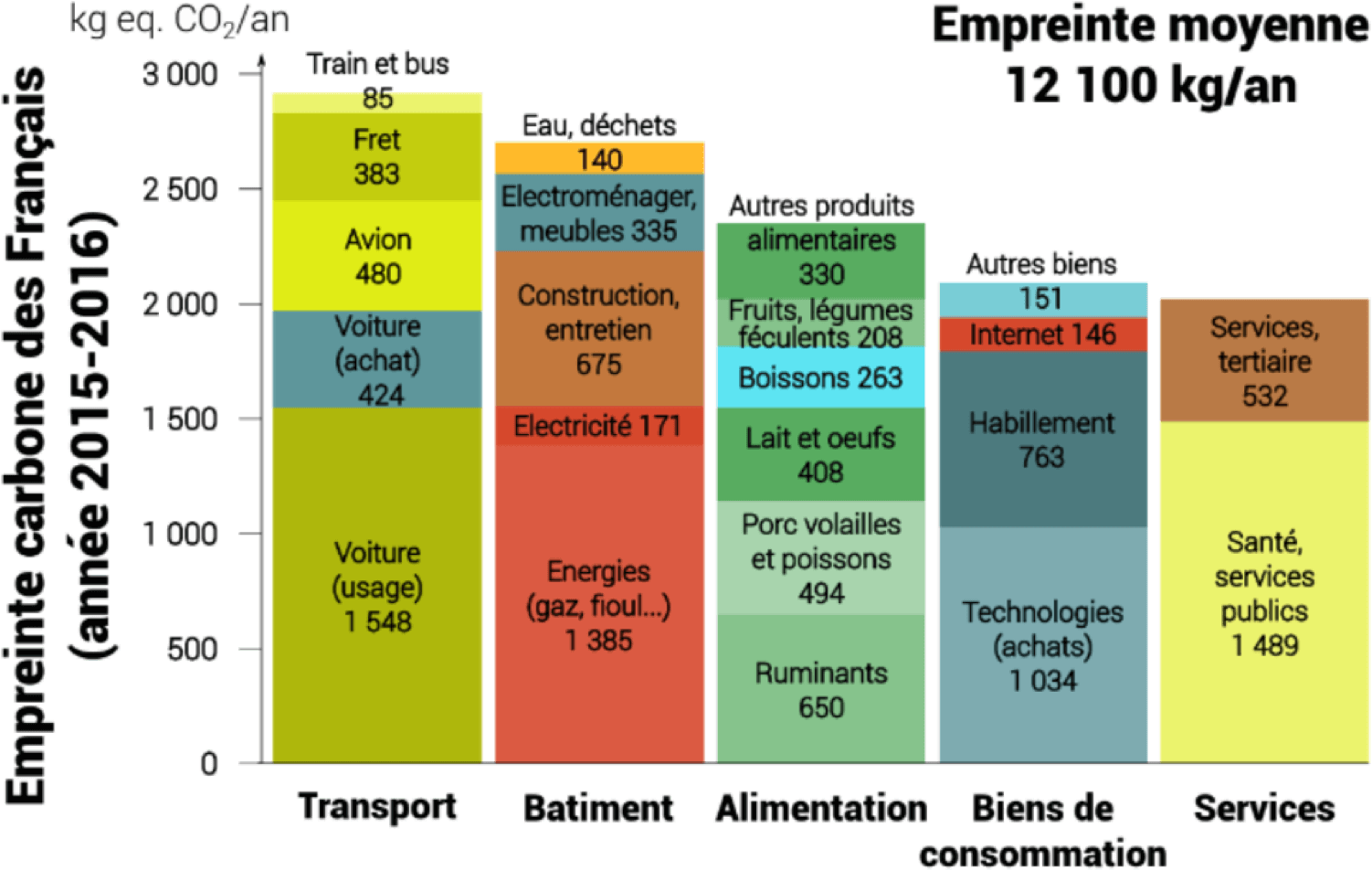
The average carbon footprint in France is 12 tonnes of CO2 equivalent (tCO2eq) per year, almost a quarter of which comes from the purchase of non-food goods. INSEE estimates that, for the average French person in 2016, purchases of electronic equipment, clothing, cars and household appliances generated more than 2.5 tCO2eq, or 125% of the carbon budget that would allow them to meet the targets of the Paris COP21. This consumption - and the resource extraction that goes with it - is therefore as much an economic issue as an environmental one, accounting for around €240 billion, or 15% of household spending.
From buying goods to consuming services: a transition to accelerate
Theorised by the Club of Rome as early as the 1960s, the functional economy, or usage economy, is an alternative to the current economic model based on producing, selling and consuming goods. This alternative replaces ownership of a product - a scooter, for example - with the use of a service: mobility. It marks a return to a more frugal model of consumption: you do not consume a scooter, but the service that allows you to get from A to B.
Christian du Tertre, economist and president of the European Institute for the Functional and Cooperative Economy, sums up the aim of the functional economy as follows: "creating the greatest possible use value while consuming the least possible material and energy resources". As a result, players acting as service providers retain ownership of the goods and have every incentive to optimise usage and extend the associated life cycles. Such a model therefore puts an end to planned obsolescence and creates value that is decoupled from resource consumption.
The proven benefits of rental and maintenance services for professional textiles:
As part of a voluntary commitment to the circular economy by AFEP member companies, ELIS, which specialises in supplying professional textiles and hygiene equipment, carried out several life cycle assessments (LCAs) demonstrating the benefits of the rental and maintenance model for workwear. Whatever the indicator (global warming, resource consumption, ecosystem quality, and so on), a shared cleaning and maintenance service such as the one offered by Elis delivers an environmental improvement of around 30 to 60% compared with more conventional economic models based on purchase and ownership, involving washing at home or at a traditional laundry.
Two key notions sit at the heart of functional economy approaches:
- a user-centred approach;
- cooperation between players, often rooted in a given area.
ADEME sums up how this type of approach is rolled out as follows:
"Companies and local players cooperate to produce an offer that delivers positive effects to the beneficiary through the service relationship. The aim is to sell a performance of use rather than simply a good or a service".
Unfortunately, the functional economy remains largely unknown to the general public and therefore to most consumers. Surveyed by Circul'R and Appinio, 69% of French people said they were familiar with neither the concept nor the term, revealing the need to raise awareness of these possibilities.
A utopian model? Quite the opposite. Well-established examples can be found across many sectors: Michelin sells kilometres driven rather than tyres; Xerox and Philips offer printing services and light in offices rather than printers and bulbs; and shared mobility services are already used by more than 40% of French people.
While these innovative business models have proved their effectiveness, they are struggling to achieve significant take-up in certain sectors. This can be explained in part by deeply ingrained consumption habits in sectors such as household appliances and clothing, and by resistance to change from economic players holding dominant positions in their markets.
Multiple potential benefits
Beyond the environmental benefits, this new model also opens up fresh opportunities for the businesses and regions concerned. By innovating in this direction and transforming their business models, pioneering companies reap multiple benefits:
- First-mover advantage and differentiation in their market
- Growth through innovation in mature sectors
- Increased product value through financing, refurbishment and technical upgrade mechanisms
- Increased customer value through added features and service longevity
- Stronger customer relationships and customer data acquisition through the interactions associated with additional services
- Preservation of product value across multiple use cycles
- Compliance and first-mover advantage in the face of regulatory changes linked to extended producer responsibility (EPR)
As for public institutions, whether or not they are directly involved with businesses, they have an opportunity to position themselves as orchestrators of new virtuous models offering several societal benefits:
- Better public services and greater adaptability to citizens' needs and uses across many areas: housing, mobility, food, health and more
- Preservation of local resources through pooling and sharing approaches
- Development of economic activity linked to reverse logistics, repair, maintenance, refurbishment and recycling
- Stronger local roots for economic players through greater cooperation between local stakeholders
- Job creation linked to new services that can be more labour-intensive than conventional industrial production models
Cooperation and user insight, the keys to taking action on the usage economy
The central aim of the functional economy is to meet users' fundamental needs sustainably, including in areas where local authorities are particularly active, such as housing, mobility, food and health. Public bodies and their partners can draw on this approach to shape public policies that are more effective and have a smaller environmental footprint.
The uses we have just mentioned are intrinsically embedded in local areas. Everyday journeys - travelling to work, taking children to school, seeing a healthcare professional or taking part in a leisure activity - make that easy to see. The geographical scale involved will of course vary depending on how users' needs are met. The growth of short supply chains, for instance, makes it possible to meet food needs locally by bringing consumers and producers closer together within an area.
The trend towards digitalisation, which makes remote medical consultations possible, for example, widens access to certain care services, including in isolated areas. These examples show that the value created by any activity that meets users' needs is inherently rooted in a place. By refocusing on the user, the functional economy restores the full importance of the territorial dimension of human activity.
Meeting users' needs through a usage economy approach requires a wide variety of organisations, operating at different geographical scales, to be involved and to cooperate. Setting up a car-sharing system across a city, for example, means getting several departments (mobility, environment, safety, planning and so on) from one or more local authorities to work together with a private mobility operator, network operators (electricity in particular) and residents' and transport users' associations. To design a service that offers a genuine alternative to the conventional model based on ownership, it is also necessary to develop a detailed understanding of users, their habits, their environment (social, cultural and so on) and the constraints of the area.
A new public mobility service in peri-urban and rural areas through car-sharing:
ECOV offers local authorities a way to rethink their shared mobility provision by opening car-pooling lines in peri-urban and rural areas where public transport is too expensive to set up and poorly suited to residents' habits. In practical terms, Ecov identifies the routes where a car-pooling line would make sense, either at set times or throughout the day. Car-pooling stops are then identified at points of interest (employment zones, park-and-ride sites and so on) and the service is launched: a passenger wanting to travel goes to the car-pooling stop nearest their home. They enter their destination by text message, mobile app or telephone helpline. It is then displayed on an illuminated sign located just before the car-pooling stop. A few minutes later, a driver heading in the same direction sees the request on the sign or on their mobile app, stops to pick up the passenger and drops them off at the requested stop. This approach creates a new form of collective transport, a new public service, developed in partnership with local authorities and co-built with citizens.
A few ways to take action in your area
Here we set out possible courses of action for public and private organisations wishing to embark on a usage economy approach in order to meet the needs of their users, customers or citizens.
Raise awareness among staff, elected officials and technical teams of the potential and success factors of the functional economy
- Develop a case tailored to the target audience: highlight the specific opportunities and benefits that different types of players can gain from moving to a model based on the usage economy
- Illustrate awareness-raising activities with success stories: the initiatives that work best are those most closely aligned with the specific features of an area. That is why case studies, examples and educational content need to be adapted to local contexts.
- Take a holistic approach to change: adopting a usage economy approach means more than changing the services provided to users; it means genuinely transforming every practice in the design, production and distribution of goods and services. This upends the very identity of organisations (purpose, work organisation, cooperation practices inside and outside the organisation, the nature of partnership, commercial and contractual relationships, and so on) and needs to be properly supported.
Run outreach activities in your area
- Bring the local ecosystem together and foster cooperation between local players, intermediary bodies and businesses.
"Good coordination and appropriate involvement of stakeholders increase the chances of the functional economy taking lasting root in an area" (ADEME, 2020)
- Draw on local facilitation bodies recognised by economic and institutional players (ADEME, regional innovation agencies, regional development agencies, professional associations and clubs and so on) to launch multi-stakeholder discussion groups on the priority themes for the areas concerned. Stable political backing and long-term commitment from funders are essential to secure these bodies, which provide the administrative and financial support behind initiatives to assist businesses and local authorities.
- Support intermediary bodies specifically dedicated to the functional economy, whose mission is to back businesses in their shift towards the usage economy, notably through collective support initiatives for company directors and operational assistance in rolling out new services. Associations such as Club Noé in the Hauts-de-France region, Macéo in Auvergne-Rhône-Alpes and Initiatives durables in Grand Est play these key roles of influence (promoting the usage economy to political decision-makers and network leaders), ecosystem facilitation, individual and collective support and project engineering.
Build the functional economy into public procurement
Applied to public procurement, the functional economy can help public bodies meet their circular economy obligations and, more broadly, contribute to an ambitious responsible purchasing policy. In practice, this requires a radical change of approach: the buyer commissions a performance of use (an outcome) rather than simply purchasing a good or a service (means), by drawing up contracts with a strong positive impact (environmental, social and economic). Energy performance contracts (EPCs) are one tool public bodies can use to this end on the subject of building energy efficiency.
ADEME recently published a methodological guide to support public buyers in this approach. Local authorities in the Grand Paris metropolitan area and members of the Institut National de l'Economie Circulaire, the Observatoire des Achats Responsables and Les Canaux can also take part in a free support programme on circular and solidarity-based procurement.
Launch concrete pilot projects
- Proceed step by step through a "small steps" strategy: once a cooperative ecosystem of players is in place and a vision has been defined, it is important to achieve concrete results quickly in order to maintain momentum while testing the changes brought about by the new models.
- Draw on dedicated funding and support schemes: for example, in 2020 ADEME launched a research-action programme for the sustainable development of local areas, called COOP'TER (Territoires de Services et de Coopérations). Designed to support business model innovation in local areas, the programme backed 2 pilot projects on the theme of food in the Île-de-France region in 2020, including EpideBri, a social enterprise based in Bondy (93) whose aim is to make healthy, sustainable food a right for everyone. To achieve this, the initiative replaces the conventional commercial approach of "selling ever more" (in volume and quantity) with a usage economy approach: offering advice on buying less (in quantity) and better, selling at a fair price, and creating opportunities to talk with users and expand the repertoire of "recipes" for eating better without spending more.
FAQ
What you need to know about us.
Qu'est-ce que Circul'R ?
Circul'R est un cabinet de conseil spécialisé en économie circulaire. Depuis 2016, il accompagne plus de 150 grandes entreprises et acteurs publics à travers des missions de conseil, des coalitions sectorielles, des programmes de formation et le Club Circul'R.
What types of organizations do you work with?
Contrairement à un cabinet RSE généraliste, Circul'R est spécialisé exclusivement en économie circulaire depuis 2016. Cette expertise transverse - filières, réglementations (AGEC, REP, ESPR), business models - lui permet de transformer la circularité en avantage compétitif mesurable : réduction d'impact, sécurisation des ressources, conformité et nouveaux relais de croissance.
What is the process for a consulting project with Circul'R?
Circul'R conseille les grandes entreprises privées - dont de nombreux groupes du CAC 40 et du SBF 120 - sur leurs décisions stratégiques, tous secteurs confondus. Le cabinet accompagne également les acteurs qui déploient les politiques publiques d'économie circulaire : éco-organismes, agences, bailleurs de fonds et collectivités.
Do you operate only in France or internationally as well?
Circul'R propose quatre offres complémentaires : des missions de conseil sur mesure pour structurer votre stratégie circulaire, des coalitions sectorielles pour résoudre des problématiques communes entre entreprises, des formations pour monter en compétence sur l'économie circulaire, et le Club Circul'R, le réseau des entreprises engagées dans la transition circulaire.
How can the circular economy be practically integrated into an existing business strategy?
Circul'R accompagne ses clients sur l'ensemble du cadre réglementaire français et européen de l'économie circulaire : loi AGEC, filières REP, CSRD, ainsi que les textes européens récents (PPWR, ESPR, CRMA). Le cabinet traduit ces obligations en feuilles de route opérationnelles, pour transformer une contrainte de conformité en avantage stratégique.
What is a sector-based coalition and how can I participate?
Une mission démarre par un diagnostic de vos enjeux circulaires (approvisionnement, éco-conception, business model, réglementation, etc.). Circul'R construit ensuite une feuille de route chiffrée et priorisée, avant d'accompagner le déploiement opérationnel des actions retenues jusqu'à la mesure d'impact et l'ajustement continu de la trajectoire.
How do you measure the results of your projects?
Basé à Paris, Circul'R intervient principalement en France et en Europe. À l'international, il accompagne des projets de coopération : partage de l'expertise française sur la REP, appui aux bailleurs de fonds sur leurs programmes de transition circulaire dans les pays émergents, via un réseau de partenaires opérationnels et d'experts sectoriels.
What is the average duration of a project?
Contactez l'équipe via le site : Circul'R analyse vos enjeux puis propose le dispositif adapté (mission de conseil, rejoindre une coalition, suivre une formation ou adhérer au Club) pour accélérer votre transition vers l'économie circulaire.